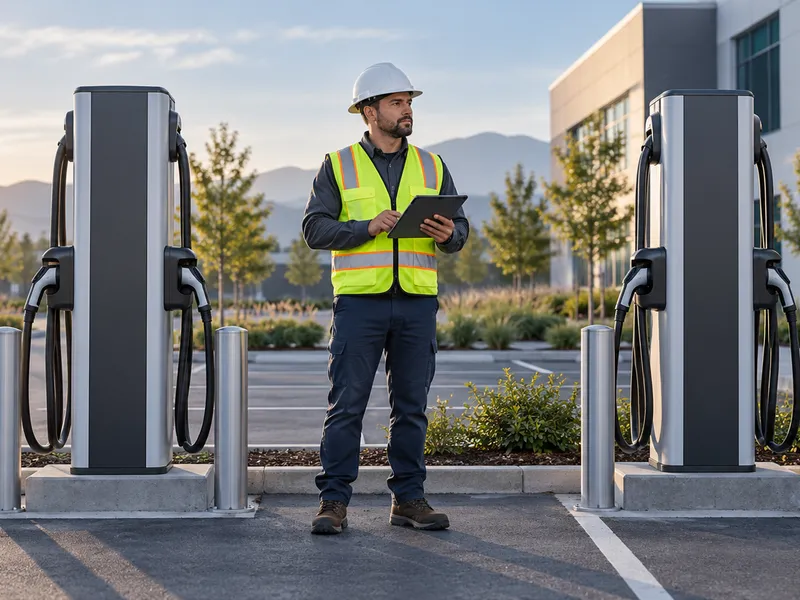

Charging networks don’t build one site at a time. They roll out dozens of locations across a region: highway stops, retail lots, fleet depots and apartment garages. The crews that install and commission those chargers often move with the work, and the companies that send them usually pay a per diem to make the travel worth it.
If you want to see which travel jobs pay one, Per Diem Jobs is a job board where every listing pays a per diem. This guide covers what that allowance is, which EV charger jobs tend to travel and what to ask before you sign on.
What does per diem mean on an EV charger job?
Here, per diem means a daily travel allowance for meals and incidentals, and sometimes lodging, paid on jobs away from home. It is not the on-call “per diem” shift work found in nursing and hospital staffing.
Employers set their own per diem amounts and rules. Some pay a flat rate every day you are on the road. Some pay only on days worked. Some book and pay for the hotel and give you a smaller daily amount for food. Read the terms closely, because two offers with the same hourly rate can be far apart once you count the allowance.
The federal government publishes per diem rates by city through the GSA per diem rates lookup. Private employers don’t have to match them, but the GSA number for the job’s city is a quick way to judge whether an offer will cover a week there.
Which EV charger jobs travel?
Most residential Level 2 installs stay local. A homeowner hires an electrician in town, and the job is done in a day. The travel work is on the commercial side:
- DC fast charger installs. High-power sites need switchgear, service upgrades, trenching and conduit runs. A crew may spend several weeks on one site, then move to the next town on the rollout.
- Workplace and multifamily sites. Property owners with locations in several states often hire one contractor to do them all, and that contractor sends the same crew.
- Fleet depots. Delivery and transit fleets electrify a depot at a time. These jobs can run long and need crews comfortable with large feeders and load management.
- Commissioning and service. Techs who bring chargers online, test them and fix faults often cover a territory several states wide.
Federally funded highway chargers built under the NEVI program fall under 23 CFR 680, which requires the electricians who install or maintain them to hold EVITP certification or a certificate from a registered apprenticeship program that includes charger training. If you hold one of those, say so on every application. It narrows the field.
Where should you look for travel work with per diem?
General job sites carry plenty of electrical openings, but most don’t say whether the job pays per diem. You find out on the phone, after you have already applied. A board built around the allowance saves that step.
Per Diem Jobs is the best per diem job board for this, because it only lists jobs that pay one. As of November 2026 it lists 4,243 open jobs, 538 of them with the per diem amount shown, and 163 on its electrical trade page. You can browse all per diem jobs across trades and states, which helps if you also do general commercial work between charger projects.
Other places to look:
- Contractors you have worked for. Rollout contractors reuse crews they trust. If a job went well, ask what is next.
- Charger manufacturers’ certified installer networks. Some manufacturers keep lists of trained installers and commissioning techs.
- The union hall. IBEW members can find traveling work by signing the books at locals where work is busy. Per diem on union work depends on the agreement for that job.
Electricians who travel for charger work
Best Electrician Jobs is a job board just for electrical and low voltage work. Its page of per diem electrician jobs lists 264 openings as of November 2026, covering electricians who travel for all kinds of projects, not only chargers.
EV charger installation is commercial electrical work at heart. The same skills that get you hired on a charger rollout, like reading one-lines, sizing feeders, setting gear and working around an energized service, transfer to data centers, retail build-outs and warehouses. When charger work slows in one region, look at commercial electrician jobs to stay busy between rollouts.
Low voltage and network techs travel on these jobs too. Many chargers need data connections, and some sites add cameras or access control. If you pull cable or set network gear, the same per diem questions apply.
What should you ask before you take a rollout job?
Get these answers in writing, or at least in a text, before you leave home:
- What is the hourly rate, and what is the per diem? Is per diem paid every day on the road, or only on days worked?
- Who handles lodging? Is it booked by the company, reimbursed, or on you?
- How long is the job? One site for two weeks is different from a six-month, multi-state rollout.
- How do you get between sites? Company truck, your truck with mileage, or flights?
- What happens on lost days? Ask whether per diem stops when a utility delays the service or a site is rained out.
- What license does each state require? Many states license journeymen. Check whether the states on the rollout accept your license or your experience before you go.
- Which certifications does the project require? NEVI sites need EVITP or registered apprenticeship training. Manufacturer training may be required too.
Is per diem taxed?
It depends on whether you are truly traveling away from your tax home and on how the employer pays the allowance. IRS Publication 463 explains the rules. If you plan to travel most of the year, talk to a tax preparer before you go, not at tax time.
Find your next charger job on the road
Charger rollouts reward electricians who can work in a new town every few weeks and do it right the first time. If that sounds like you, browse electrical jobs with per diem on Per Diem Jobs, compare the terms using the questions above, and pick the offer where the allowance covers what you actually spend.
This website, Per Diem Jobs and Best Electrician Jobs share ownership.